Why Homes in Newcastle Experience More Drainage Problems
A slow-draining sink, water pooling around the yard, or a toilet that keeps backing up may initially seem like a minor inconvenience. However, for many Newcastle homeowners, these are early signs of a larger drainage problem developing beneath the property.
Newcastle’s rainfall patterns, established suburbs, mature trees and varied ground conditions can all place pressure on residential drainage systems. In some homes, ageing pipes or poorly planned renovations add another layer of risk.
When these conditions overlap, a small restriction can quickly become a blocked drain, overflowing gully or wastewater backup.
Understanding why drainage problems are common across Newcastle can help homeowners recognise warning signs earlier, avoid repeated blockages and protect their property from preventable water damage.
Why Are Drainage Problems Common in Newcastle?
There is rarely one single cause.
Drainage problems in Newcastle are often the result of local environmental conditions interacting with the plumbing beneath a property. Heavy rain may overwhelm an already restricted stormwater line. Tree roots may enter a pipe that has weakened with age. Ground movement may cause an older joint to separate and begin collecting waste.
Newcastle also contains a mixture of older housing, renovated properties, established gardens and newer developments. This means drainage conditions can vary significantly between neighbouring homes.
The most common contributing factors include:
Periods of heavy or intense rainfall
Older or deteriorating underground pipes
Tree-root intrusion
Debris entering stormwater systems
Ground movement and shifting soil
Incorrect pipe gradients
Increased runoff from paved areas
Poorly connected additions and renovations
Grease, wipes and household waste entering drains
A professional inspection is often needed to determine which issue is affecting the property.
1. Heavy Rain Can Expose Existing Drainage Weaknesses
Newcastle receives rainfall throughout the year, with Bureau of Meteorology climate data showing an annual mean of approximately 1,125 millimetres at its Newcastle station.
Rain itself does not usually create a healthy property drain blockage. Instead, it exposes restrictions and weaknesses that are already present.
During intense rainfall, water runs from roofs, driveways, patios and other hard surfaces into the stormwater system. City of Newcastle explains that this runoff travels through drains, pipes and channels before reaching local creeks, wetlands, estuaries, the Hunter River and Newcastle’s beaches.
A stormwater pipe may cope during light rain but overflow when a large volume of water arrives quickly. This can happen when the pipe is:
Partially blocked by leaves, silt or roots
Cracked or collapsed underground
Too small for the amount of runoff
Connected incorrectly
Installed with insufficient fall
Discharging into a restricted outlet
The result may be water pooling beside the home, overflowing gutters, flooded outdoor areas or moisture entering garages and lower rooms.
City of Newcastle identifies flash flooding as intense rainfall producing runoff that exceeds the capacity of the drainage network. The council has continued investing in stormwater upgrades, reflecting the broader drainage challenges faced across the city.
Local homeowner takeaway
Drainage problems that appear only during rain should not be ignored. A system working correctly in dry weather may still have insufficient capacity or a partial blockage that becomes visible during a storm.
Local Drainage Tip: Check outdoor drains before forecast heavy rain. Remove visible leaves and surface debris, but avoid pushing material farther into the pipe.
Worried About a Slow or Recurring Drain?
Slow drainage, gurgling sounds, and unpleasant odours can be early signs of a developing blockage. An inspection can help identify the problem before it causes an overflow or property damage.
2. Some Newcastle Homes Still Rely on Ageing Drainage Pipes
Many Newcastle suburbs have long-established housing stock. While older homes contribute to the character of areas such as Mayfield, Hamilton, Lambton, New Lambton, Merewether, Wallsend and surrounding suburbs, their underground drainage may not have been upgraded at the same pace as the visible property.
Depending on the property’s age and renovation history, underground drainage may contain older materials, ageing joints or sections installed under different plumbing standards.
Over time, pipes can develop:
Cracks and fractures
Separated joints
Internal corrosion
Low or sunken sections
Misaligned connections
Partial collapses
Rough internal surfaces that trap waste
These defects do not always cause an immediate blockage. Waste, paper, grease and debris can gradually collect around the damaged section until water can no longer move freely.
A homeowner may clear the blockage and believe the problem has been solved, only for it to return several weeks or months later.
Why recurring blockages matter
Repeated drain clearing without inspecting the pipe can treat the symptom rather than the underlying cause.
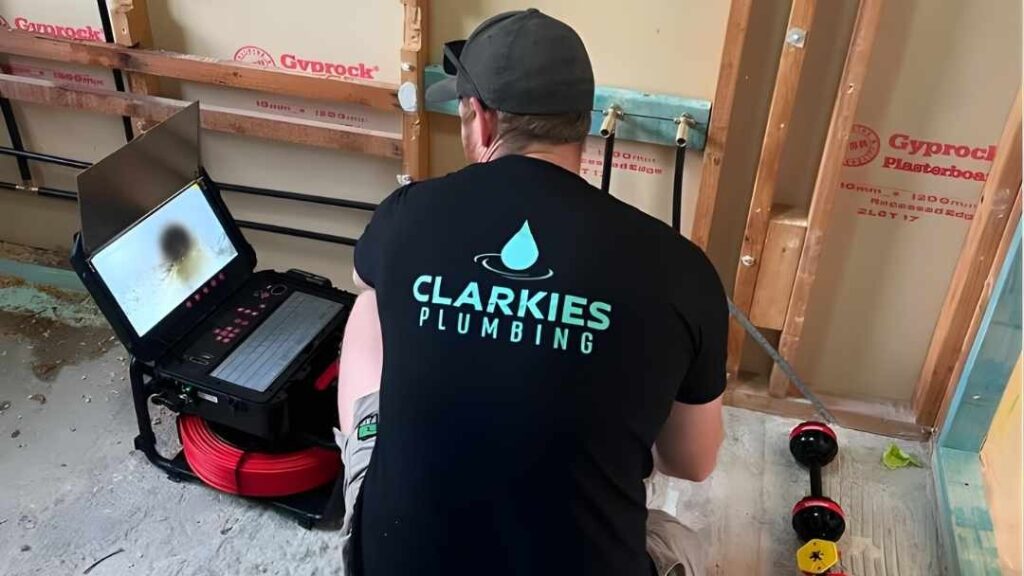
A CCTV drain camera inspection allows a plumber to examine the inside of the line and identify whether the blockage is being caused by roots, damage, poor alignment or accumulated waste.
Warning Sign: A drain that blocks repeatedly in the same area may have an underground structural defect rather than an ordinary one-off obstruction.
3. Mature Trees Can Find Weak Points in Underground Pipes
Newcastle’s established streets and leafy residential areas are an important part of the city’s appeal. However, mature trees can also contribute to underground drainage problems.
Tree roots do not normally break into a completely sealed, undamaged pipe simply because it is nearby. They are more likely to enter through an existing crack, loose joint or small opening where moisture is escaping.
Once inside, the roots can continue growing and create a net that catches:
Toilet paper
Hair
Food waste
Grease
Soap residue
Other material travelling through the drain
The blockage becomes progressively worse until wastewater drains slowly or stops moving altogether.
Newcastle’s urban forest guidance notes that much of a tree’s root system is located within the upper layers of soil and can extend well beyond the tree canopy. This means a tree does not need to be directly beside a drain to affect an existing weakness.
Signs tree roots may be affecting a drain
Common indicators include:
Blockages that repeatedly return after clearing
Several household fixtures draining slowly at once
Gurgling sounds from toilets or floor wastes
Unpleasant smells around outdoor drains
Wastewater rising through a shower or floor drain
A blockage that becomes worse after periods of rain
Removing the roots may restore flow temporarily, but the damaged section of pipe may still need repair to prevent regrowth.
4. Newcastle’s Landscape Can Affect How Water Moves
Newcastle includes low-lying areas, former wetland environments, coastal zones, slopes and heavily developed urban catchments.
A City of Newcastle flood study notes that parts of the city were developed on former swamplands and that earlier urban expansion did not always account adequately for natural water paths or the possibility of stormwater channels overflowing.
This helps explain why drainage behaviour can differ between suburbs—and even between properties on the same street.
A home in a low-lying area may experience slow surface-water dispersal, while a sloping property may receive runoff from land above it. Properties containing retaining walls, steep driveways or lower-level rooms may also need carefully designed drainage to direct water safely away from the building.
Potential problems include:
Water collecting in low sections of the yard
Runoff travelling towards the home
Saturated soil remaining wet after rain
Surface water crossing boundaries
Erosion around paths and retaining walls
Stormwater entering subfloor areas
Water pooling against foundations
These problems may not be caused by a blocked sewer drain. They can relate to stormwater layout, surface levels, inadequate pits or unsuitable discharge points.
5. More Paving Means More Water Entering Drains Quickly
Home improvements can unintentionally increase pressure on a property’s stormwater system.
Patios, concrete driveways, extensions, sheds and paved entertaining areas prevent rainwater from soaking naturally into the ground. Instead, water runs across the hard surface and enters pits and pipes much faster.
City of Newcastle’s development controls recognise that increasing impervious surfaces changes stormwater behaviour and reduces the amount of rainfall that can soak into the soil.
Problems can develop when a property is renovated without assessing whether the existing drainage has enough capacity for the additional runoff.
For example:
A larger roof directs more water into existing downpipes.
A new driveway sends runoff towards an undersized pit.
A covered patio is connected to an already overloaded stormwater line.
Landscaping changes redirect water towards the house.
A renovation covers or restricts access to inspection points.
A drainage assessment should form part of renovation planning, particularly when a project adds roof area or hard surfaces.
6. Leaves, Silt and Garden Debris Can Block Stormwater Lines
Outdoor drains naturally collect more debris than internal wastewater pipes.
Leaves, bark, soil, mulch, sand and small branches can enter grates and gutters, especially during wind and heavy rain. Material may accumulate in pits or travel farther into a stormwater pipe.
Once the flow becomes restricted, additional debris collects more easily.
Common problem areas include:
Driveway channel drains
Yard pits
Downpipe connections
Grates beneath trees
Drains beside retaining walls
Low points in paved areas
Stormwater outlets
Debris can also contribute to wider local flooding when it obstructs drainage infrastructure. City of Newcastle notes that blocked drainage lines can increase the likelihood of localised flooding.
Regular surface cleaning helps, but a drain that remains slow after visible debris has been removed may have a blockage deeper in the line.
7. Household Habits Can Create Internal Drain Blockages
Not every Newcastle drainage problem is caused by weather or underground pipe damage. Many blockages begin with everyday material entering sinks, toilets and floor drains.
In the kitchen
Cooking fats, oils and grease may enter the sink as liquids but cool and harden inside the pipe. Food particles then stick to the buildup, gradually narrowing the drain.
In the bathroom
Hair, soap residue and personal-care products can combine inside shower, bath and basin wastes.
In the toilet
Toilets are designed primarily for human waste and toilet paper. Wipes, sanitary products, paper towels and other materials may not break down properly, even when packaging describes them as flushable.
These blockages often begin slowly. Homeowners may notice:
Water taking longer to drain
A sink making gurgling sounds
Water rising briefly before flowing away
Odours from a floor waste
More than one fixture becoming slow
Acting at this stage is usually easier than waiting for a complete backup.
8. Renovations Can Leave Homes With Poor Drainage Connections
Drainage Problems After Heavy Rain?
Pooling water or overflowing outdoor drains may indicate blocked stormwater pipes, tree-root intrusion, or a drainage system struggling with increased runoff.
Newcastle has many properties that have been extended or renovated over time.
A kitchen may have been relocated, a second bathroom added or an outdoor area enclosed. When plumbing additions are poorly planned or connected, they can create long-term drainage problems.
Common installation issues include:
Pipes with insufficient fall
Incorrectly sized waste lines
Too many fixtures connected to one branch
Inadequate venting
Difficult-to-access inspection points
Stormwater connected to the wrong system
Old and new pipe materials joined poorly
Drainage installed without considering future access
The problem may not appear immediately. A marginal pipe gradient may work when usage is low but struggle as more people use the home or additional fixtures are added.
A licensed plumber can assess whether the current drainage layout is appropriate for the property.
Stormwater and Sewer Drainage Are Not the Same
Understanding which system is affected helps determine who should be contacted.
Stormwater drainage
Stormwater systems carry rainwater from roofs, gutters, driveways and outdoor surfaces away from the property. Common stormwater problems include:
Overflowing outdoor pits
Water pooling after rain
Downpipes backing up
Flooding around the home
Water flowing across driveways or yards
Sewer or wastewater drainage
Wastewater pipes carry used water from toilets, sinks, showers, baths, laundries and other fixtures towards the sewer network.
Common wastewater problems include:
Toilets backing up
Several fixtures draining slowly
Sewage smells
Wastewater overflowing from an inspection opening
Dirty water rising through a floor drain
Hunter Water advises that property owners are generally responsible for maintaining, repairing and replacing wastewater pipes and fittings on their property up to the connection with Hunter Water’s system. This includes the boundary trap and inspection shaft.
However, an overflowing inspection shaft may indicate a problem within the public sewer system and should be reported to Hunter Water.
Important: Do not assume every outdoor overflow is a council or water-authority issue. A licensed plumber can help determine whether the blockage is inside the property boundary.
Which Newcastle Areas Can Experience Drainage Problems?
Drainage problems are possible throughout Newcastle, but the causes may differ by property and location.
Homes in established suburbs may be more likely to encounter ageing pipes, mature roots or historical plumbing alterations. Low-lying areas may experience greater stormwater pressure during intense rainfall. Sloping properties may struggle with runoff, erosion or water travelling towards lower parts of the home.
Signs Your Newcastle Home Has a Drainage Problem
Watch for slow drains, gurgling sounds, unpleasant odours, overflowing outdoor drains, water pooling after rain, or blockages that keep returning.
If several fixtures are affected at once, or wastewater begins rising through a shower or floor drain, the problem may be deeper in the main drainage line and should be inspected promptly.
How to Prevent and Fix Drainage Problems
Keep leaves away from outdoor drains, clean gutters and downpipes, avoid pouring grease into sinks, and use drain strainers.
For recurring issues, a plumber may use CCTV cameras, high-pressure water jetting, or targeted repairs to find and fix the underlying cause.
Book a Drainage Inspection in Newcastle
A slow, blocked, or overflowing drain can quickly lead to unpleasant odours, wastewater backups, and property damage. Clarkies Plumbing provides professional drain inspections, blockage clearing, and targeted repairs across Newcastle.
Our licensed plumbers identify the source of the problem and recommend a practical solution to help prevent it from returning. Get in touch today for reliable drainage services and a free plumbing quote.

One Response